From gut feel to ground truth: why charity leaders need independent data.
This is the third issue in our series, ‘From Insight to Action’. You can find the rest of the series here. Leaders sometimes make the biggest calls in the fog. Budgets are tight, headlines shift weekly, and everyone has a convincing story about what will work next. In that environment, gut feel is inevitable – and sometimes valuable – but it’s also where bias creeps in. What steadies the hand is independent evidence: a clear, continuous view of the public that can challenge assumptions, de-risk board decisions and support more confident strategy-making.
The problem many leaders need to solve
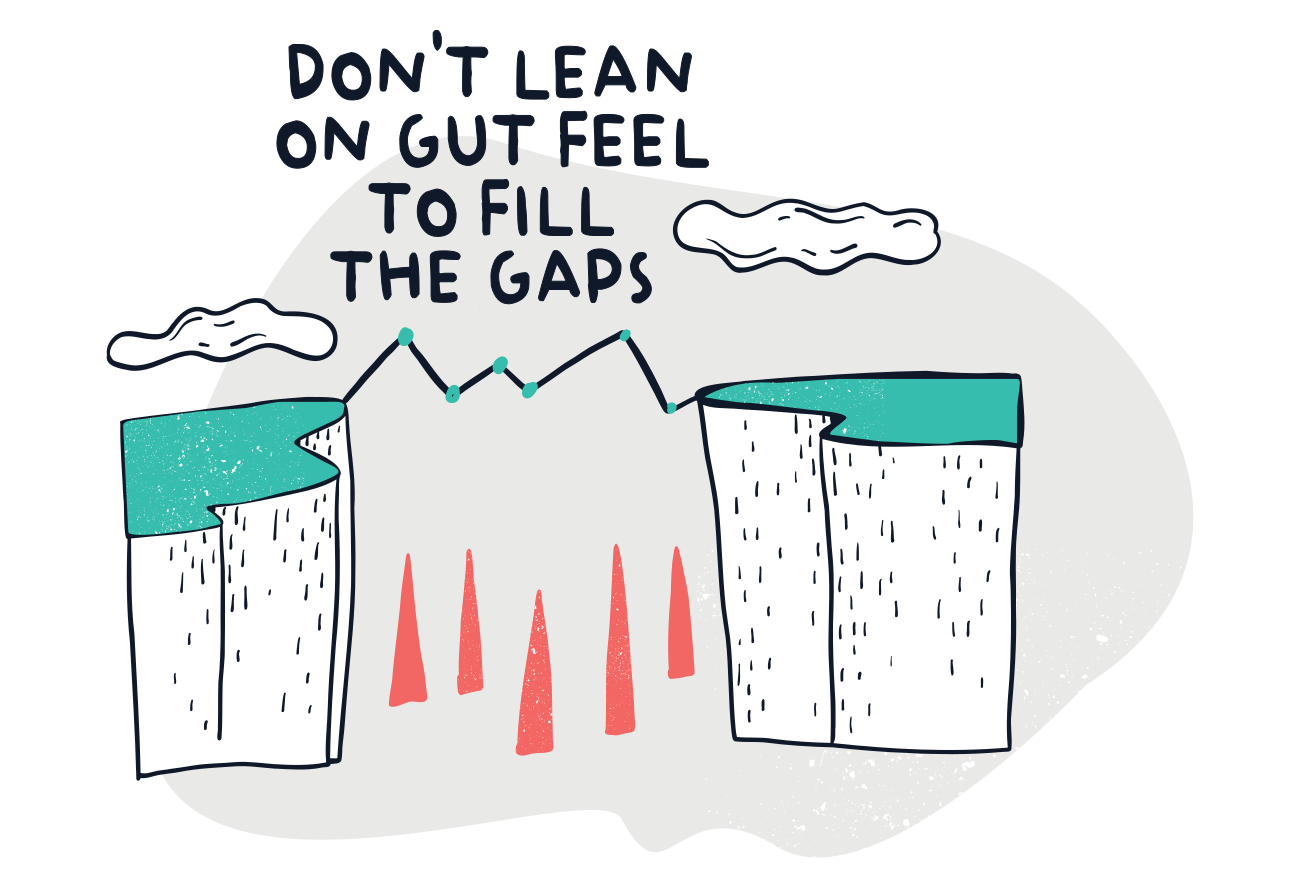
Internal customer data is excellent for stewardship and delivery. It shows who already engages and how they behave – under yesterday’s conditions. On its own, it is too narrow for strategy. When we rely on intuition to fill the gaps, recency bias takes over: the last place we worked, the loudest stakeholder, the best anecdote. Boards are then asked to choose under uncertainty, where confidence can be mistaken for consensus without an external baseline to test against.
Why independent, external data matters
Independent data offers a neutral yardstick, cutting through internal narratives and turf interests. It widens the frame beyond the CRM to the whole market, so you can spot headroom for growth, saturation and white space. It helps debias decisions by countering groupthink, optimism bias and the ‘we are the audience’ fallacy. Crucially, it adds time to the picture – tracking change to show direction and turning points, not just snapshots.
What leaders can do with it
First, pressure-test your strategy assumptions. Ask, ‘which belief, if wrong, would most hurt us?’ and check it against the public read. Second, prioritise with clarity – know your audiences, weigh opportunities, and sequence investments for now versus later. Third, align the board around facts. A shared external baseline turns opinion debates into explicit trade-offs. Fourth, move from outputs to outcomes by linking attitudinal shifts to KPIs such as consideration, acquisition, income or service uptake. Finally, keep an eye on the road ahead, not just the dashboard – leading indicators often flicker before revenue or demand does.
Where this changes decisions in practice
- Audiences – know where the market is heading, be explicit about ‘who you’re for’, and focus effort where the opportunity is.
- Brand – are we truly distinctive in the groups that drive growth, or only famous with the base?
- Fundraising – which motivations unlock new or lapsed supporters, and where is fatigue setting in?
- Services – what unmet needs exist by segment and geography; where should we scale versus partner?
- Campaigns – which issues resonate beyond the choir, and which should we retire?
- Policy and communications – which social currents should we surf – and which should we avoid swimming against?
What 'independent' should look like
Independence comes from the method, not the logo on the report. Quality is everything: you need controlled samples, stable questionnaires and expert research design so you’re measuring the thing you think you’re measuring. It should be comparable and continuous – the same questions, asked at a sensible cadence – so movements are real, not artefact. And it should be segment-aware: demographics plus mindsets, tied back to your organisation’s strategic goals. That’s how insight turns into action.
Pitfalls to avoid
First, beware vanity metrics. Awareness without consideration or motivation is a warm blanket that can hide a cold reality. Second, challenge egocentric perspectives – ‘we just need to tell the world how great we are’ – because your competitors think the same, the world is busy and self-centred messages rarely travel. Third, don’t sing to the choir; doing and saying the same thing delivers the same results. And finally, resist snapshot insight: single surveys lack context and invite overreaction. Trends keep you honest.
From insight to action with CharityTracker
CharityTracker gives leaders an independent, always-on read of public attitudes and behaviours – built for UK charities. We combine general-population tracking with segmentation that shows who to reach, what to say and where to find them. Our KPI frameworks will help you link leading indicators to growth outcomes, and our board-ready annual reporting can turn evidence into clear choices.
Whether you're looking to get more from your membership or you're exploring CharityTracker for the first time, do get in touch – we’d love to continue the conversation.